


Planning, Design & Construction
Forestry and Environmental Conservation Building
February 2024 – April 2026
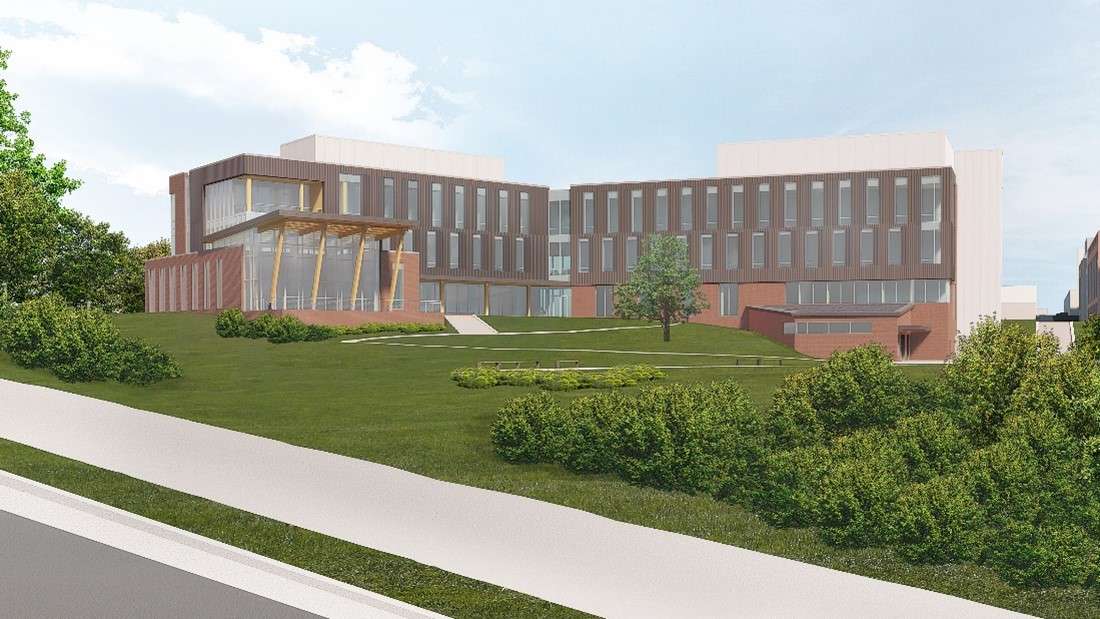
This project is a new, approximately 85,000-square-foot building to house Clemson University’s Forestry and Environmental Conservation (FEC) department, part of the College of Agriculture and Life Sciences (CAFLS). It will replace the existing Lehotsky Hall on the Ag Quad. Spaces will include teaching and research labs, offices, classrooms, storage, and collaboration areas necessary to support the department’s teaching and research missions.
The gateway design is based on a series of folded wings that integrate into the site and create a garden courtyard. The indoor–outdoor connection is paramount, and the landscape will serve as a teaching tool to supplement the learning environments within the building. The design features a mass-timber structure, primarily utilizing CLT floors and glulam beams and columns. The north “campus” face will offer a new front porch for students that terminates the existing Ag Walk and further activates the southern portion of campus. While remaining contextual to Clemson University with a traditional brick and metal panel palette, the building showcases mass-timber components in several key locations.
Project Team
Architect, Interior Design, Sustainability, Structural, Mechanical, Electrical, and Plumbing Engineering:
 Charlotte, NC
Landscape Architect:
Core Studio Design
Baltimore, MD
Contractor:
Ajax Building Company
Greenville, SC
Sustainability and Carbon
In addition to pursuing two Green Globes, the design team is conducting a life-cycle carbon analysis to understand the building’s embodied and operational carbon.
Tree Management Plan
A total of 31 trees will be removed and 137 planted for a net gain of 106 trees. A portion of the site will be reforested with native species to provide a teaching outdoor laboratory and improve the current ecosystem. Trees will also provide shade for hardscape elements, improve stormwater quality, beautify the area, support animal habitat, and enhance the campus environment.
Highlights
- Modern spaces for teaching, learning, research, and collaboration
- Landscape integrated into the building as a learning environment
- Distinctive mass-timber structure